
Hazardous Area Classification | DSEAR and ATEX Experts
Practical, Cost-Effective HAC and Drawings
We provide specialist hazardous area classification (HAC) services across the UK and Europe, helping organisations achieve DSEAR and ATEX compliance.
Using our experience and judgement, we avoid overly conservative zoning, enabling cost-effective ATEX equipment selection while maintaining full DSEAR compliance.
Unlike many providers, we include detailed HAC drawings as standard which can displayed on site to show operators and contractors where ignition sources must be controlled.
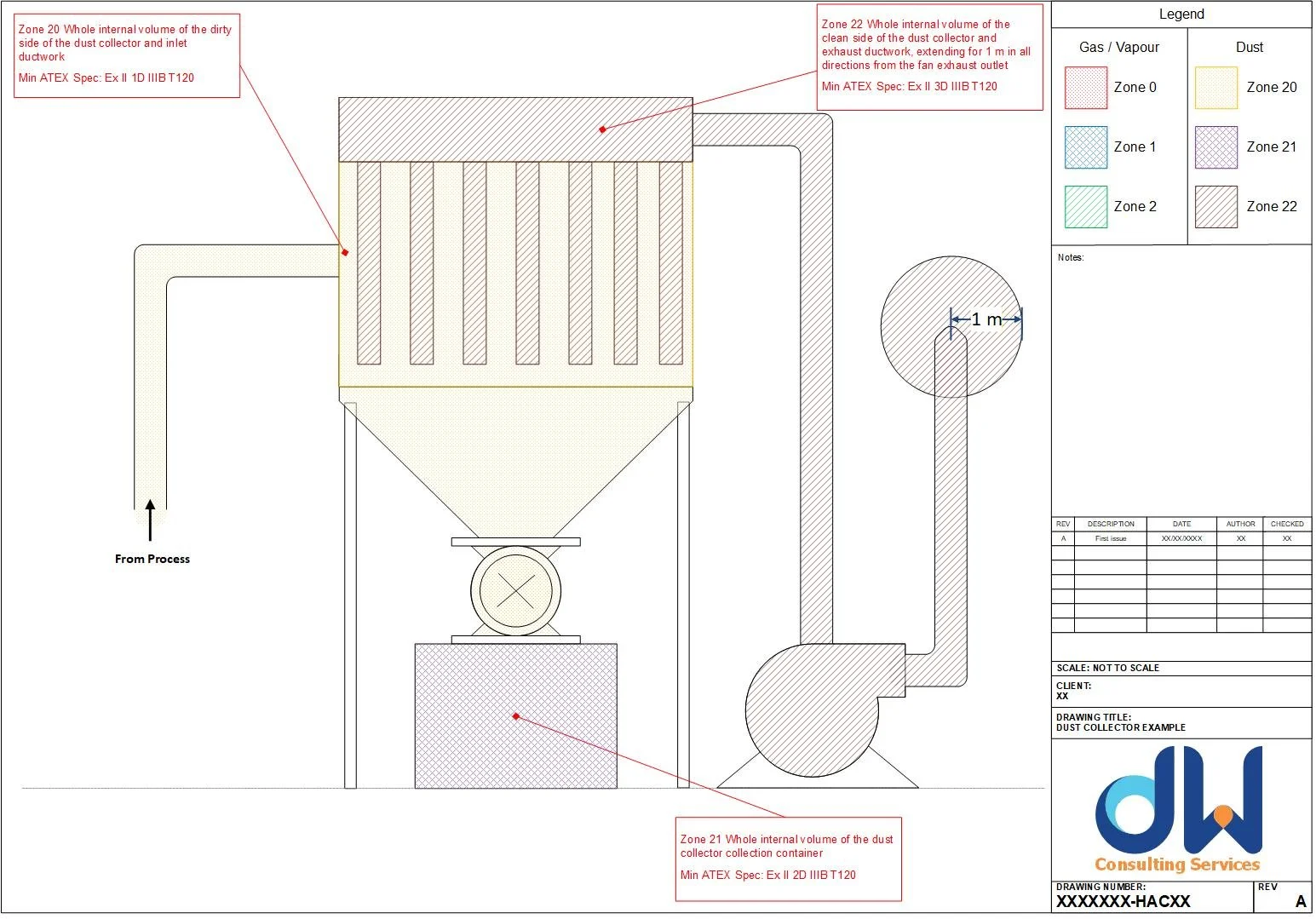
Hazardous Area Classification (HAC) Process
Hazardous Area Classification (HAC) can be a complex process. We specialise in providing a HAC document and drawings which are easy to understand, allowing you to effectively control ignition sources where explosive atmospheres could be present.
We have a lot of experience in classifying both existing plants and design stage processes. HAC is a vital input into the design process for new builds and modifications. A good HAC can prevent project delays and overspend.
Step 1: Gather Data
The first step in HAC is to gather information on your site, processes and substances used. This includes:
Material properties (dusts, gases, and vapours)
Process descriptions and operating conditions
Drawings (site layout, PFDs, and/or P&IDs)
Ventilation details
If there is an existing process, we will always conduct a site visit to gather data - there is no substitute for seeing the process in person!
For desktop-based assessments, we will send a tailored request for information to conduct the HAC based on our experience of similar processes.
Step 2: Select Applicable Standards and Guidance
We have a vast knowledge of standards and industry guidance, allowing us to select the most applicable for your process.
We use recognised industry standards and industry guidance where appropriate for HAC, including:
EN 60079-10-1 for gases and vapours
EN 60079-10-2 for combustible dusts
IGEM/UP/16 and IGEM/SR/25 for natural gas installations
Energy Institute Model Code of Practice Part 15 (EI 15) for flammable fluids
National Fire Protection Association (NFPA) standards
REA guidance for landfill gas and leachate extraction
Step 3: Develop the HAC Document and Drawings
We conduct a detailed assessment of the process to classify the hazardous zones, taking into account material properties, quantity of substances used, process conditions, ventilation, and other considerations.
The HAC document is produced in line with the format given in EN 60079-10-1:2021, which includes:
List of release sources
Grade of release
Process conditions
Ventilation assessment
Zone classification and extent
Minimum ATEX equipment specification required for each zone
Reference to any standards, guidance, and calculations used
HAC drawings are then produced using either MS Visio or AutoCAD to show the hazardous zones in both plan and elevation view, as required by the DSEAR ACOP.
Step 4: Follow Up Meeting
We offer a follow up call to discuss the findings of your HAC, answer any questions, and advise on the next steps for achieving DSEAR and ATEX compliance.